Outsourcing a plastic component program is a supply-chain decision, not just a purchase order. As an OEM and ODM plastic parts manufacturer, the role is to take a defined product requirement - drawing, specification, forecast, and quality agreement - and deliver certified parts into your line or your customers’ hands on a schedule you can plan around. Build-to-print and design-supported models are both supported, so the engagement can start from a finished drawing or from a performance requirement that still needs engineering input. For the buying team, the practical question is not whether a supplier can mold plastic, but whether it can own a program end to end: tooling, molding, finishing, documentation, and delivery, with one accountable point of contact.
OEM and ODM Plastic Parts, Built Around Your Brand
For brands that want to own the product but not the molding floor, a contract manufacturing partner absorbs the capital, the process engineering, and the day-to-day variation control. The value is measured in what does not happen: no line-down events from a late shipment, no audit surprises from missing records, no field returns from a part that drifted out of tolerance. A mature OEM program runs as an extension of your own operations, with the documentation your quality team expects and the forecasting your planning team relies on. The supplier becomes the part of your supply chain that you do not have to manage hour to hour.
ODM takes the relationship one step further. Where you have a performance requirement but not a released drawing, the supplier contributes design and DFM, prototypes the concept on real resin, and hands you a qualified part plus the record behind it. That path shortens time to market for new products and reduces the internal engineering load on your team.
Manufacturing Capability
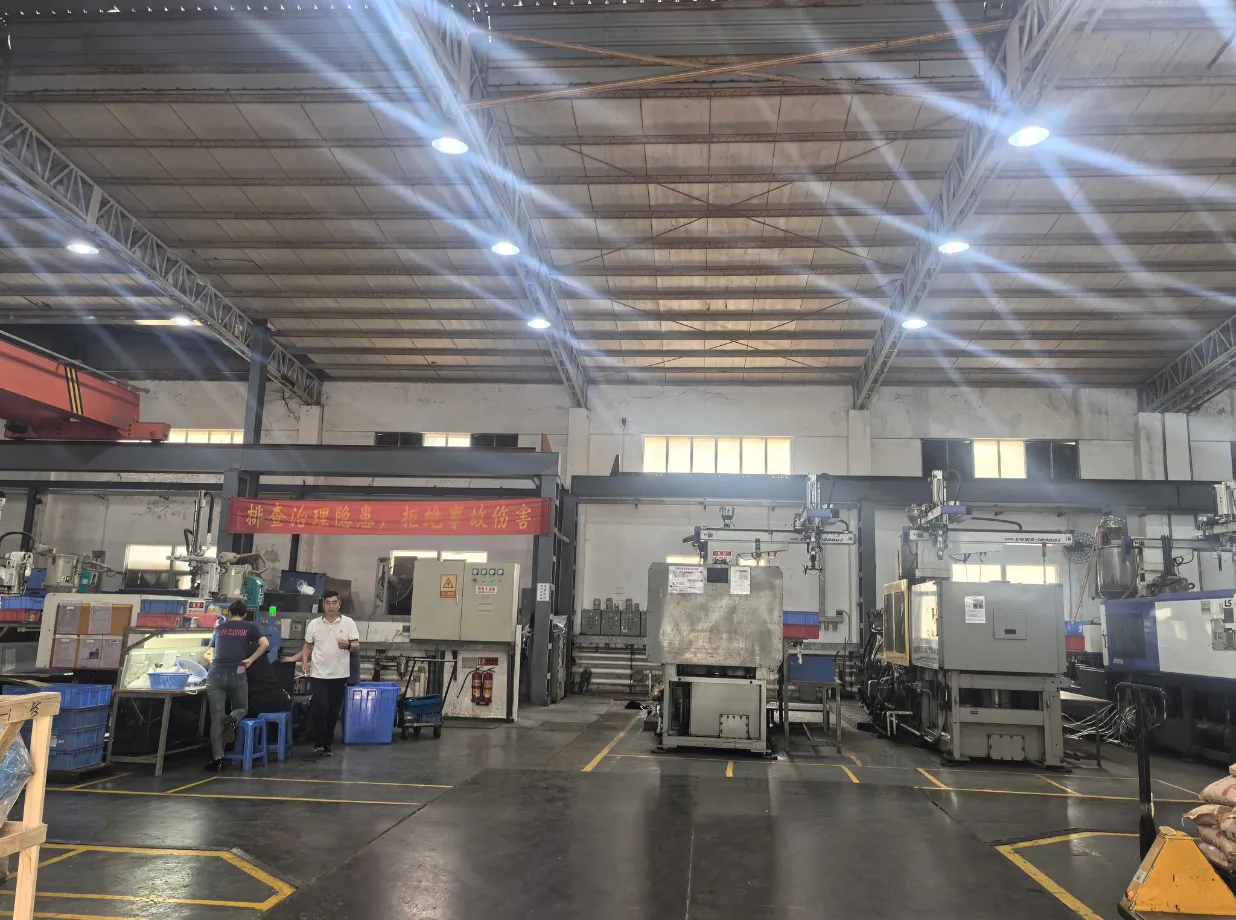
The Dongguan facility supports full-program contract molding: build-to-print production, turnkey programs that include tooling and secondary operations, consignment arrangements where you supply resin, and vendor-managed inventory that ships against your pull signal rather than a fixed purchase order. Presses span 50T to 800T with a stated annual capacity above 50,000,000 parts, so a single program can scale from pilot quantities to steady multi-year volume without changing suppliers. Sub-assembly, kitting, and packaging to your specification are handled in-house so the delivered unit is ready for your line, not a bag of loose components that your team must sort and join.
Automation matters at this scale. Robotic part removal, integrated insert loading, and automated packaging reduce human variation and protect consistency across long runs. Central material handling and dehumidifying dryers keep resin conditions stable so the process starts from a known-good baseline every shift. These are the details that separate a floor that can hold a tolerance from one that merely claims to.
Engineering Considerations
OEM work lives or dies on change control. Every drawing release, resin change, and tolerance adjustment moves through a documented DFM and NPI gate before steel is cut or production resumes. Functional datums and critical-to-quality characteristics are identified up front, and the first article becomes the master the line is held to. For automotive programs, PPAP documentation packages are supported from the first lot; for medical and electronics, the same discipline protects traceability and fit. The engineering team is available during DFM, not only at the press, which is the difference between a partner and a job shop.
Tooling is designed for the part and the volume together. Gate and runner sizing control fill and weld lines, cooling layout controls cycle time and warpage, and venting controls burn and short shots. These decisions are made by engineers who also run the presses, so the tool is built to be molded, not just to be machined.
Materials
Commodity and engineering grades are both in scope - ABS, PC, PP, PA6/PA66, POM, TPU, and PBT - including glass-filled, flame-retardant, and food- or medical-contact grades where the program requires them. Resin is qualified by lot, dried to spec, and color-matched; the specific grade and its documentation are retained so a repeat order is chemically identical to the approved sample. For regulated programs, the material certification and lot record travel with the shipment, which is what your compliance team needs at audit time.
Applications
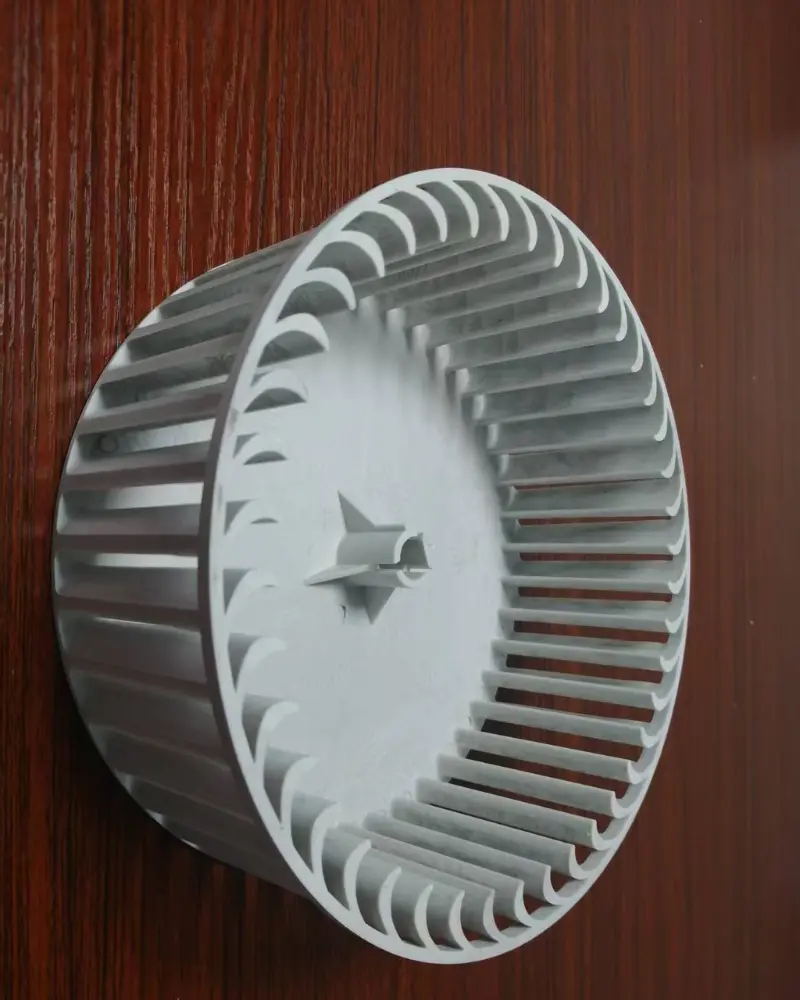
Typical OEM outputs are branded enclosures, white-label housings, sub-assemblies, and certified shipments that arrive with the paperwork your customers demand. The part may be invisible in the final product or it may be the product; either way the acceptance criteria are yours, and the manufacturing record behind them is complete. Common examples include control-unit housings, connector bodies, fluid-path fittings, and device shells that carry your brand through someone else's supply chain.
Industries Served Under Contract
Contract programs run across automotive, medical, electronics, EV energy, and industrial brands. The common thread is that the buyer is a brand owner who needs a manufacturing capability without owning the floor - and who needs that capability to behave predictably across years of supply. Automotive demands PPAP and traceability; medical demands cleanliness and lot records; electronics demands fine features and flatness; EV demands flame-retardance and consistency; industrial demands durability. A floor that has shipped to all five brings pattern knowledge from one sector into another.
OEM Program Process
A contract program follows a defined path: requirement and forecast review, DFM and quote, in-house tool fabrication and tryout, first-article inspection and approval, ramp to steady production with SPC on critical dimensions, then scheduled shipments against your pull or forecast. Because tooling, molding, and finishing share a building, the critical path from design release to first shipment is short and owned by one accountable team. Each step has an owner and a record, which is what lets your incoming inspection confirm rather than discover.
Quality Control for Contract Supply
An ISO 9001 system underpins incoming material verification, first-article inspection, in-process SPC, and final audit against the approved drawing. Critical characteristics are tracked lot by lot and retained for audits and field recalls. For regulated industries, the traceability and PPAP documentation your quality team needs ship with the parts, not after a follow-up email. The point of this structure is not ceremony; it is what turns a one-off good shipment into a million identical good shipments.
Cost and Lead-Time Factors
In an OEM program, tooling is amortized across the program life, so per-part cost improves as volume steadies. Vendor-managed inventory and kitting can lower your landed cost and your working capital by shifting holding risk to the supplier. Tooling and first-article approval dominate lead time; a clean DFM with in-house fabrication compresses that path. Resin grade, secondary operations, and documentation depth set the remaining cost. Buyers who fixate on piece price usually miss the larger cost levers, which are tooling strategy and supply rhythm.
Buyer Checklist for an OEM Program
- Provide the 3D model, 2D drawing, and critical tolerances, or the performance spec if open.
- State annual volume, lot sizes, and whether shipments are forecast- or pull-based.
- Define the quality agreement: inspection level, PPAP tier, record retention.
- Clarify IP ownership, consignment vs turnkey, and who holds the tool.
- Specify packaging, labeling, and any sub-assembly or kitting requirements.
- Agree on a forecast and a capacity-reservation window for volume ramps.
Production Scaling
The same engineering team that qualifies the pilot qualifies the volume run, so scaling is a capacity decision rather than a re-learning exercise. Cavitation can increase and steel can harden as demand proves out, while the qualified first article keeps the part identical. Reserved capacity and VMI protect your line during demand spikes, and a single accountable supplier removes the vendor-switch risk that usually breaks a supply agreement. Knowing this timeline helps you plan your own launch and spot a supplier whose schedule lacks defined gates.
Common Mistakes Buyers Avoid
The expensive errors in contract molding are predictable. Releasing a drawing without a DFM pass and paying for tool revisions; choosing a supplier on piece price alone and losing delivery discipline; under-specifying documentation and then scrambling at audit; and splitting tooling, molding, and finishing across vendors so no one owns the result. A program that consolidates these under one roof and one quality system avoids all four.
Evaluating an OEM Partner
When you shortlist a contract manufacturer, the questions that separate a partner from a supplier are practical. Is tooling built and maintained in-house, or outsourced to a shop you cannot see? Are process and quality engineers available during DFM, or only at the press? What documentation ships with each lot - PPAP, lot traceability, material certs? Can the plant show program experience in your sector, and can it reserve capacity for your ramp? The answers predict whether your program stays predictable at volume, which is the real measure of a contract manufacturer.
Price is the visible number, but the hidden ones are scrap rate, on-time delivery, and the cost of your own quality team re-deriving evidence the supplier should have provided. A partner lowers those; a low piece price with weak documentation raises them. Weigh the total cost of ownership, not the unit price.
A Typical OEM Program Walkthrough
A representative contract program for a branded enclosure runs roughly as follows. Weeks one to two: requirement and forecast review, DFM, and quote, with design changes agreed on the drawing. Weeks three to six: in-house tool fabrication and tryout, including first-article measurement. Week seven: FAI approval and quality-agreement sign-off. Week eight onward: ramp to steady production with SPC on critical dimensions and shipments against your pull signal. Knowing this timeline helps you plan your own launch and spot a supplier whose schedule lacks defined gates.
Supply Chain and Logistics
Contract supply is as much about flow as about molding. Parts are packaged to survive transit and labeled to your specification, with barcode and lot traceability available, and the plant ships to North America, Europe, and Asia with the documentation international logistics requires. Vendor-managed inventory turns the shipment from a fixed purchase order into a pull signal your planning team controls, which lowers your working capital and your risk of a line-down event. Reserved capacity protects your schedule when demand spikes.
Confidentiality and IP
For brand owners, the geometry is the product, and protecting it is non-negotiable. Drawings and models are handled under standard confidentiality; proprietary geometry is treated as customer property and is not reused or shown outside the program. Tooling ownership is defined up front - you hold the tool, or the supplier holds it under a defined agreement - so there is no ambiguity about who controls the asset if the program ends. These terms belong in the contract, not the conversation after award.
Glossary for Buyers
- Build-to-print - the supplier molds exactly to your released drawing.
- ODM - the supplier contributes design and DFM, then delivers a qualified part.
- PPAP - production part approval process, the automotive quality standard.
- VMI - vendor-managed inventory, shipments triggered by your pull signal.
- Turnkey - the supplier owns tooling and operations for the program.
Total Cost of Ownership for Contract Supply
The unit price is the smallest part of the cost conversation in contract molding. The larger levers are tooling strategy, scrap rate, inspection burden, logistics, and the cost of your own team re-deriving evidence the supplier should have provided. A program with in-house tooling, SPC, and lot traceability may quote a higher piece price and still cost less over its life than a cheaper program that ships surprises. When you compare suppliers, score them on total cost of ownership: what you pay, what you risk, and what you must do yourself to accept the parts.
Capacity and Forecast Planning
Contract supply works best when the forecast is shared, not hidden. A realistic volume range and ramp curve let the supplier reserve press capacity, stage resin, and plan tool maintenance so your line never waits. Vendor-managed inventory turns that forecast into a pull signal your planners control, lowering both stockouts and excess. The supplier that plans with you is cheaper than the one that merely reacts to purchase orders, because the cost of an unplanned expedite is paid by both sides.
Related Capabilities
Related programs: Custom Plastic Injection Molding for bespoke geometry, Plastic Injection Mold Manufacturing for the tooling, and Low Volume Injection Molding for bridge supply. Overview on the homepage.
See also Plastic Injection Molding Services for the full service range. Commercial terms and drawings: plasticmolder.com or the contact page.