Buyers rarely want one isolated operation; they want a manufacturing partner who can take a product from drawing to delivered, finished part. Plastic injection molding services is the umbrella that covers the full range - tooling, molding, prototyping, low-volume, custom and OEM work, plus finishing and assembly - under one quality system and one accountable team. This page is the capability statement and the engagement model, written for sourcing and engineering leads deciding how to structure a program.
Plastic Injection Molding Services, End to End
Engaging a single supplier for the whole program removes the hand-offs that add cost, lead time, and variation. Tooling is built where the parts are molded; prototypes prove the design on real resin; low-volume covers bridge and spares; custom and OEM programs carry it to production. The point is one process record from first article to steady supply, owned by one team that answers when something drifts. For the buyer, that means one contract, one quality system, and one accountable contact.
Manufacturing Capability
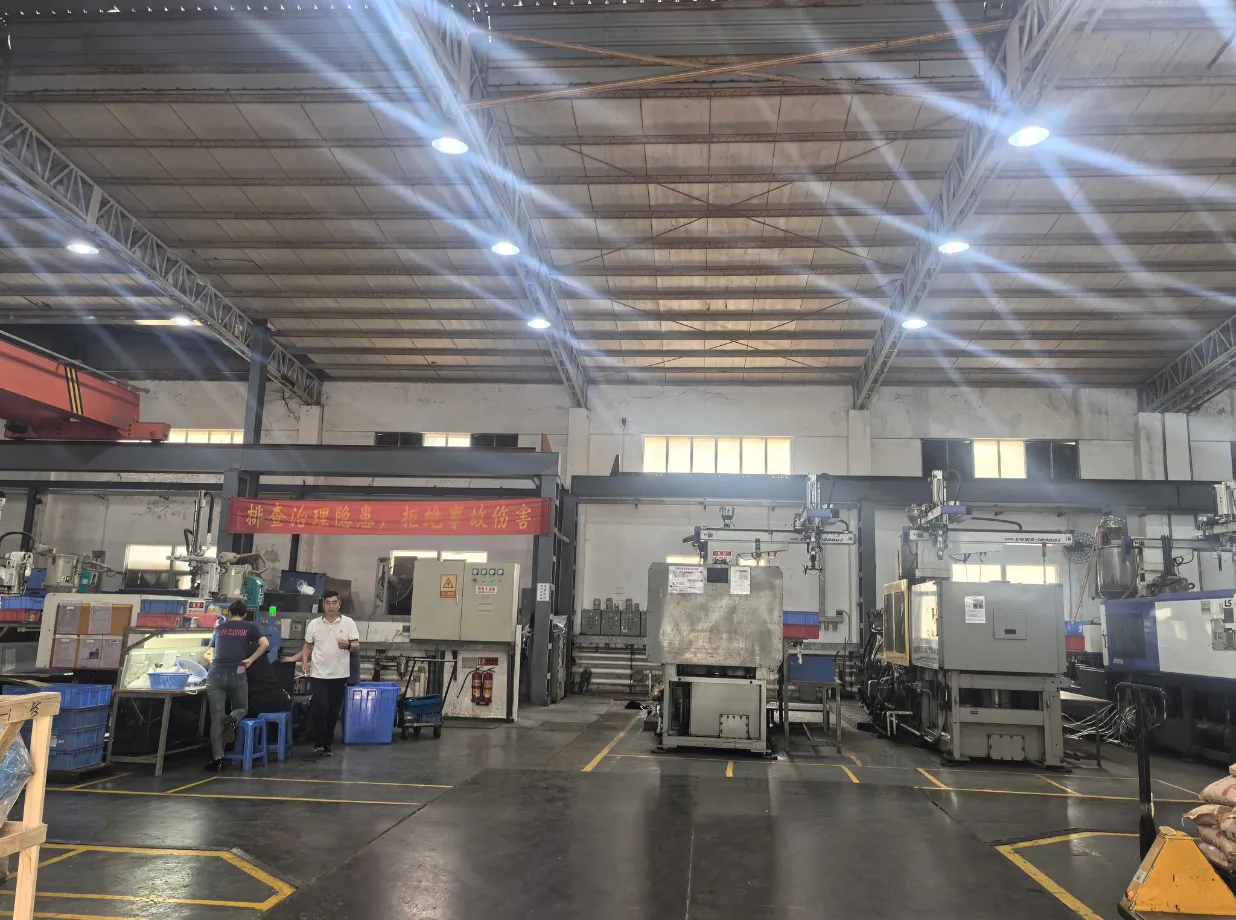
The Dongguan facility runs 50T to 800T presses with centralized monitoring, in-house tooling, and integrated secondary operations, supporting an annual capacity above 50,000,000 parts. Tolerances of +/-0.02 mm on critical features, shot weights to 2000 g, and mold life rated to 1,000,000 shots describe an envelope in which the process is predictable rather than heroic. Robotic handling, cavity-pressure monitoring, and SPC charting keep that envelope stable across long runs and multiple shifts.
Engineering Considerations
Across every service, DFM is the gate before steel. Wall uniformity, draft, gating, and ejection are reviewed; tolerances are assigned by function; and the first article becomes the master the line is held to. The same engineering discipline applies whether the job is a prototype, a custom part, or a multi-year OEM program, which is why a supplier that offers all services can carry a part through its whole life without re-learning it at each stage.
Materials
The material library spans commodity and engineering thermoplastics - ABS, PC, PP, PA6/PA66, POM, TPU, PBT - including glass-filled, flame-retardant, and medical-contact grades. Resin is qualified by lot and dried to spec, so the choice is matched to function and documented for repeat orders. For regulated programs, material certification travels with the shipment.
Applications
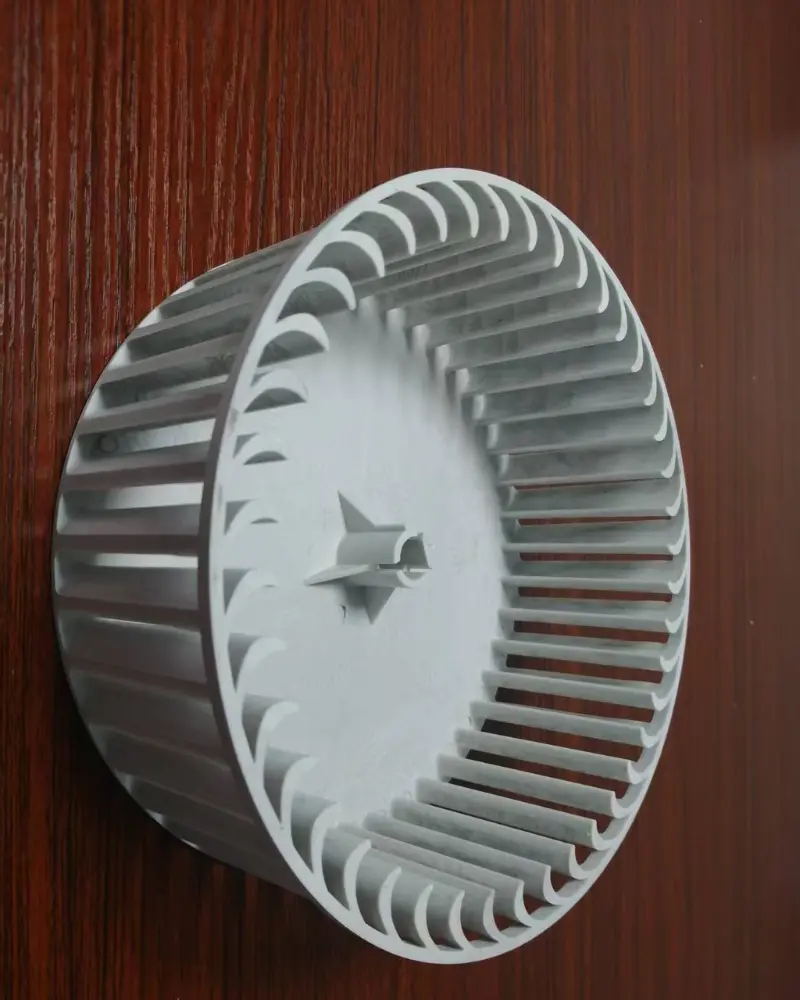
Services cover housings and enclosures, connectors and terminals, gears and bushings, fluid-system components, medical and EV parts, and the sub-assemblies that combine them. The range exists because the same floor and quality system serve all of them, and because most programs need more than one service to reach a finished part.
Industries
Programs run across automotive, medical, electronics, EV energy, and industrial sectors. Each sector sets its own documentation and performance bar; the underlying process control is common to all, and the supplier adds the documentation layer each sector requires rather than running a separate floor per market.
How a Services Engagement Runs
The typical engagement is requirement review and DFM, in-house tool fabrication and tryout, first-article inspection and approval, then molding with SPC on critical dimensions and scheduled shipments. You can enter at any stage - prototype only, tooling only, or full program - and the same quality system applies. The defined gates (quote, DFM, tryout, FAI, ramp) give you visibility into lead time and a clear handoff between stages.
Unified Quality Control
An ISO 9001 system underpins incoming verification, first-article inspection, in-process SPC, and final audit, with critical characteristics tracked lot by lot. For regulated industries, PPAP documentation and traceability are supported so your quality team can release incoming material with confidence. Because one system covers every service, a part that moves from prototype to production keeps the same inspection logic.
Cost and Lead-Time Factors
Program-based costing amortizes tooling across volume, and consolidating operations lowers landed cost versus coordinating several vendors. Tooling and first-article approval dominate lead time; in-house fabrication and engineering compress the critical path. Resin grade, finishing, and inspection depth set the remaining cost. The saving from a single supplier is usually the eliminated coordination, not a lower hourly rate.
Buyer Checklist for Requesting Services
- State which services you need: tooling, molding, prototype, custom, OEM, finishing, assembly.
- Provide the model, 2D, and critical tolerances, or the performance spec.
- Give volume, lot size, and whether bridge or production is needed.
- Note regulatory marks and documentation expectations.
- Define packaging, labeling, and any sub-assembly needs.
- Agree on a single point of accountability for the program.
Production Scaling
Because every service shares one quality system and one team, scaling from prototype to production is continuity, not a hand-off. Cavitation and steel can increase as demand proves out, the qualified first article keeps the part identical, and reserved capacity protects your schedule during ramps. The same engineering and quality records follow the part across its life.
Evaluating a Services Partner
A full-service supplier is judged by integration, not by any single operation. Ask whether tooling, molding, and finishing share a building and one quality system; whether engineering is available across every stage; and whether one contact owns the program. The advantage of a single supplier is the elimination of hand-offs, so verify that the advantage is real in the supplier's organization and not just on its website. The cheapest hourly rate spread across three vendors usually costs more than one accountable partner.
A Typical Engagement Walkthrough
A representative engagement runs as follows. Requirement and DFM review scope the program and the services needed. Tool fabrication and tryout happen on-site, followed by first-article approval. Molding ramps with SPC on critical dimensions, and finishing or assembly completes the part. Shipments are scheduled against your forecast. Because every stage shares one quality system, the part carries the same inspection logic from prototype to production, and you have one contact for the whole path.
Service Integration Benefits
Consolidation pays in three currencies: lead time, variation, and coordination cost. Lead time drops because the critical path stays inside one building. Variation drops because the process window is owned by one team across stages. Coordination cost drops because you manage one supplier, one quality agreement, and one set of records. For programs that touch several services, these savings usually exceed any small rate difference with a specialist shop.
Common Program Risks
The risks in a multi-service program are scope creep, hand-off gaps, and unclear ownership. Scope is controlled by a clear statement of which services are in and out. Hand-off gaps are controlled by keeping operations under one roof. Ownership is controlled by naming a single program contact with authority across stages. A supplier that structures for these three controls is the one that delivers the finished part, not a list of partial operations.
Glossary for Buyers
- Bridge tooling - a soft tool that serves demand before production tooling.
- Turnkey program - the supplier owns tooling and operations end to end.
- NPI - new product introduction, the path from design to production.
- SPC - statistical process control on critical dimensions.
- Single point of accountability - one contact owns the whole program.
Scoping the Right Service Mix
The first step in a services engagement is scoping: which operations the program actually needs. A new product may need prototyping, tooling, molding, and finishing; a bridge situation may need only low-volume molding; an established product may need only repeat production and assembly. Scoping honestly - naming what is in and out - prevents paying for capacity you do not use and gaps you discover late. The supplier's job in this step is to map the path from your drawing to a finished, shippable part.
Single Supplier Versus Multi-Vendor
The trade-off between one supplier and several is integration versus specialization. A single, full-service supplier removes hand-offs, shortens the critical path, and gives you one accountable contact, at the cost of some rate leverage on any single operation. Multiple specialists give you best-of-breed rates but add coordination, variation at every hand-off, and no single owner. For programs touching several services, the integration saving usually exceeds the rate difference, which is why a unified services model fits most buyers.
Aligning Quality Systems
When one quality system covers every service, a part carries the same inspection logic from prototype to production, and your quality team interfaces with one set of records. The alignment is structural, not promised: the same incoming verification, first-article, SPC, and lot-traceability discipline applies at every stage. This is what lets your incoming inspection confirm rather than re-derive, and it is the quiet reason multi-service programs ship more consistently than stitched-together ones.
Lead-Time Planning Across Stages
Lead time in a services program is the sum of its stages, and the critical path stays shortest when those stages share a building. Tooling, tryout, first-article, and ramp happen in sequence under one team, so a delay in one is visible and owned, not buried in a vendor hand-off. Planning with the supplier's staged gates - quote, DFM, tryout, FAI, ramp - gives you a realistic timeline and early warning if a stage slips, which is how a program stays on schedule.
Continuous Improvement in a Program
A program does not stop at first shipment. As volume grows, cavitation and steel can be optimized, cycle time reduced, and scrap lowered through the SPC data the line already collects. A services partner treats these as ongoing, because the same team sees the whole life of the part and can act on the trend. The buyer benefits as cost and variation fall over the program's life, which is the return on choosing a supplier that owns the process rather than renting a machine.
When a Full-Service Model Fits
A full-service model fits when a program touches more than one operation - tooling plus molding plus finishing, or prototype plus production - and you would rather manage one accountable partner than a chain of specialists. It also fits when lead time matters, because the critical path stays inside one building, and when consistency matters, because one quality system covers every stage. If your need is a single, stable operation with no integration benefit, a specialist may be simpler; for most multi-stage programs, integration wins.
Avoiding Scope and Ownership Gaps
The failures in a services program are scope creep, hand-off gaps, and unclear ownership, and all three are prevented by structure. Scope is fixed by a clear statement of which services are in and out; hand-offs are removed by keeping operations under one roof; ownership is fixed by naming a single program contact with authority across stages. A supplier that structures for these controls delivers a finished part and a single record, not a set of partial operations you must assemble and reconcile yourself.
How to Compare Services Quotes
Comparing services quotes is comparing programs, not prices. Beyond the piece price, score the tooling strategy and amortization, the cavitation and steel grade for your volume, the resin and finishing scope included, the inspection and documentation level, and the lead-time commitment with its gates. A lower quote that excludes finishing or shifts documentation to you is not cheaper once your team absorbs the gap; a higher quote that delivers a finished, documented part under one quality system often costs less over the program. Ask each supplier to itemize the same scope so the comparison is real, and weigh total cost of ownership, not the headline number.
Service Level Expectations
A services agreement should state more than price. Define the inspection level and documentation (PPAP tier, lot traceability, record retention), the packaging and labeling, the forecast and any capacity-reservation window, and the single program contact with authority across stages. These terms set the supplier's behavior as much as the drawing does, and they are what let you manage the program by exception rather than by firefighting. Put them in the contract, not the conversation, so both sides are accountable to the same standard.
Handover From Prototype to Production
The smoothest programs treat prototype and production as one continuous path, not two separate jobs. The prototype proves the design and resin on real material; the production tool scales cavitation and hardens steel while reusing the DFM learning and the first-article baseline. Because the same team and quality system carry the part forward, the handover is a capacity step, not a re-qualification, and the production part is identical to what your tests approved. Continuity is the quiet advantage of a single services partner.
Related Capabilities
Explore the full set: Plastic Injection Molding, Injection Mold Manufacturing, Prototype Injection Molding, Low Volume Injection Molding, Custom Plastic Injection Molding, and OEM Plastic Parts Manufacturer.
Commercial detail: plasticmolder.com or the contact page. Commercial terms and drawings: plasticmolder.com or the contact page.